

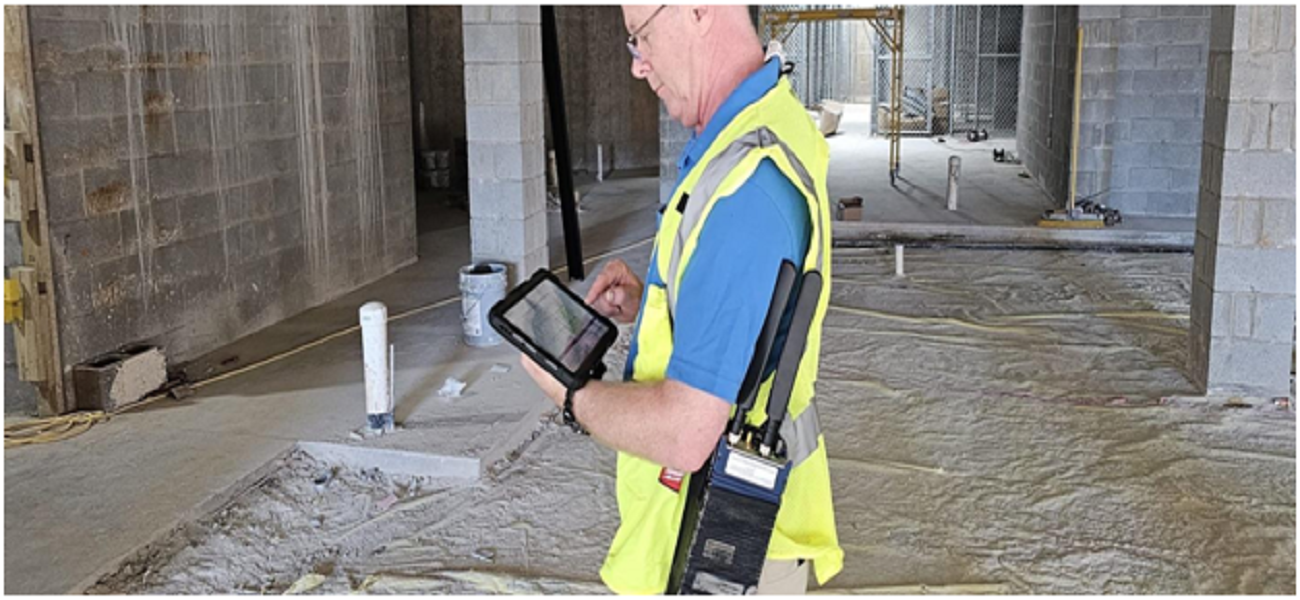
ERCES testing tends to land at the worst time. You are close to a certificate of occupancy, tenants are asking about move-in dates, and the project team is already stretched. Then the radio coverage test comes back short in stairwells, elevators, or a basement level, and the closeout plan suddenly changes.
A failed result is not the end of the project, but in Austin, Houston, and San Antonio, it is treated as a life-safety compliance issue tied to adopted fire code requirements and local enforcement practices. That means the fix needs a documented, code-aware approach, not quick patches, and the sooner you treat it like a permit item, the better.
Why Buildings Fail ERCES Testing More Often Than Owners Expect
Many owners assume the building will pass because cell service feels “fine,” or because other inspections already cleared. ERCES is different. The test measures first responder radio performance across a defined grid and in “critical areas,” and modern construction can be brutal on RF. Concrete cores, steel framing, low-E glass, underground parking, and long interior corridors can swallow signal even when outdoor coverage is strong.
Failures also show up after late changes. A tenant build-out adds walls and equipment. A revised floor plan shifts where the required spaces land. Even fire-rated doors and elevator vestibules can create pockets that were not obvious earlier. In many jurisdictions, the standard is not “it works most of the time,” it is “it meets the required coverage level where the code says it must.”
What a Failed Test can Trigger Right Away
The first impact is usually administrative. If final inspection or occupancy approval depends on emergency responder radio coverage, a failure can pause sign-off until a correction plan is accepted and documented. Some AHJs require a complete submittal package, including drawings, battery backup details, and a report format they can review quickly.
For an owner, the bigger problem is the domino effect. Delayed occupancy can disrupt lease starts, closeout payments, and lender timelines. If you are mid-renovation, a late failure can also expand scope because remediation may involve equipment rooms, pathways, and coordination with other monitored systems.
What the Remediation Process Looks Like in Real Buildings
After a failure, the right move is diagnosis, not guessing. The test data should show where the weak points are and whether the problem is downlink, uplink, or both. A capable integrator will confirm the AHJ’s requirements first, such as frequency bands, required areas, and the pass criteria used for acceptance.
From there, the fix usually falls into tuning and distribution. That can mean adjusting gain, relocating antennas, changing splitters, improving cable routing, or adding antennas in trouble zones. In some cases, it also means improving the donor signal, adding filtering, or correcting grounding and power issues that cause instability. If the building has multiple stair towers or deep parking, it is common to need targeted additions rather than a whole-system rebuild. When the solution includes a public safety DAS, the objective is reliable, repeatable two-way radio performance, not maximum output.
Retesting Requires a Documented Process and it Matters
Owners are often surprised that retesting is structured. Many AHJs expect the same method used in the original acceptance test, including grid spacing, test points, and labeled measurements. If the failure was in stairwells or elevator lobbies, the retest will usually lean hard on those locations because responders cannot avoid them during an incident.
Reporting can be as important as the measurements. Some jurisdictions prefer third-party testing. Others focus on technician qualifications and calibrated tools. Either way, a clean report with clear maps and consistent naming reduces review cycles and keeps the project from stalling on paperwork.
Budget and Timeline Realities in Austin, Houston, and San Antonio
Cost depends on how far the building is from passing and how much infrastructure already exists. If pathways, equipment space, grounding, and power were planned for enhancement, corrections can be contained. If you are retrofitting late, costs rise because opening ceilings, routing cable, and reworking fire stopping add labor and coordination.
Schedule risk is often larger than equipment cost. Lead times, permitting, and getting a retest slot with the AHJ can stretch the calendar, especially when multiple trades are competing for access to finished spaces. This is also where owners sometimes decide to address broader tenant connectivity at the same time, because opening ceilings once is cheaper than doing it twice. If you are adding an in building DAS for commercial coverage, treat it as a separate scope with separate performance goals, so life-safety work does not get delayed by carrier coordination.
What Owners Should Insist On in Documentation and Sign-Off
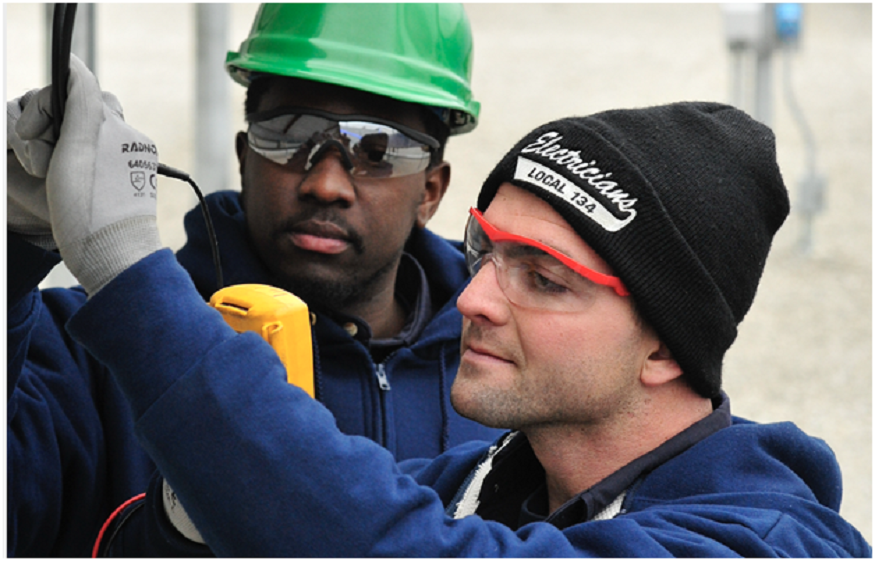
A strong remediation effort produces a paper trail that matches the RF performance. Owners should expect updated as-built, an equipment list, battery backup documentation, and a clear description of supervision and alarming, since those details are commonly reviewed during plan check and inspection.
You should also insist on an operations plan. Even a perfectly tuned system can drift as batteries age, contractors touch cabling, or new walls go in. Ask who will own the testing calendar, where the as-built will live, and how service calls will be handled when a tenant reports “radio issues” during a remodel. A maintenance and recertification cadence keeps you from repeating the same crisis next year, and it protects the investment you already made in your public safety DAS.
How to Reduce the Odds of Failing Again
The most practical strategy is to treat ERCES like other life-safety systems, not like a one-time inspection hurdle. Coordinate early with the AHJ on what they consider “critical areas,” validate donor signal assumptions before walls go up, and use grid testing as a design tool instead of a final surprise. Austin publishes an ERCES submittal checklist that shows how much they value completeness and code references, and it is a useful model even outside city limits.
Also, keep the boundaries clear between responder radio coverage and tenant cellular expectations. Tenants may report “bad signal” and assume everything runs through one system, but life-safety radio coverage and tenant mobile service are handled differently. Treat the commercial plan as its own scope, and if you install an in building DAS, position it as a separate solution from ERCES so responsibilities, timelines, and testing requirements stay clear even when schedules get tight.
Conclusion
Failing ERCES testing is stressful because it hits schedules, budgets, and occupancy deadlines at once. The fastest recoveries usually come from a calm, data-driven approach: understand the failure points, remediate with code-aware design, document the changes, and retest using the method your AHJ will accept.
CMC communications can support owners who want a structured path from diagnosis to passing documentation. Their team works on code-driven in-building wireless projects, including RF design, installation, and testing support, so stakeholders can move from uncertainty to a clearer compliance plan without guesswork.
FAQs
Q 1. Does a failed ERCES test mean my building is unsafe right now?
Ans 1. A failure means the radio performance did not meet the acceptance criteria used by the AHJ during testing. It does not automatically mean responders cannot communicate at all, but it does mean there are measurable weak areas that need correction and verification. Treat it like any life-safety deficiency: document the gaps, implement an approved fix, and retest.
Q 2. Where do buildings most commonly fail coverage testing?
Ans 2. Stairwells, elevator lobbies, basements, and interior corridors are frequent problem areas because they sit inside dense cores and are wrapped in concrete and steel. Parking levels can be especially challenging due to grade and distance from donor signal sources. These areas also tend to be treated as critical, so they get extra attention during acceptance testing.
Q 3. Can we just turn up the amplifier power to pass?
Ans 3. Simply increasing gain can create interference, trigger shutdown protections, and still leave dead spots, especially on the uplink where responder radios must reach out of the building. A proper fix typically involves RF design changes, antenna distribution adjustments, and verification testing, so performance is repeatable across the required grid.
Q 4. How often do ERCES systems need testing after they pass?
Ans 4. Many AHJs require periodic testing, often annually, to confirm coverage and backup power remain within requirements as the building changes. Even when the local rule is less specific, periodic verification is a practical risk control because batteries degrade and construction changes can affect antennas and cabling.
Q 5. What is the difference between ERCES and a regular cellular signal booster?
Ans 5. ERCES is designed specifically to support first responder radio frequencies required by local fire code, not general cell phone use. It must meet strict performance, backup power, supervision, and documentation standards set by the AHJ. A regular cellular booster improves commercial carrier coverage for tenants but does not satisfy life-safety radio requirements. The two systems serve different purposes and are reviewed under different compliance criteria.