

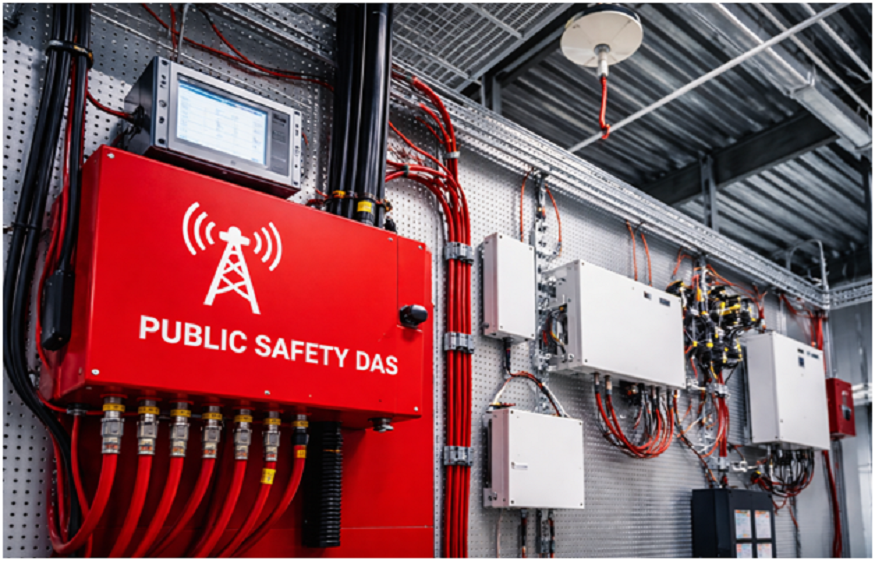
During the past decade, Texas’ commercial buildings have evolved quickly. Glass facades, energy-efficient construction, underground parking, and tighter interior layouts can improve comfort and cost-effectiveness. Unfortunately, they can also introduce a more stubborn issue. As soon as a first responder moves beyond the lobby, their two-way radio signal may drop in stairwells, mechanical rooms, elevators, and tightly packed interior corridors. In an emergency, that gap is not just inconvenient. It can slow coordination, interrupt rescues, and make evacuations harder to manage.
That’s why many local fire authorities treat in-building radio coverage as a real safety requirement, not an optional upgrade. The Authority Having Jurisdiction, which usually enforces the rules, is typically the fire marshal or the fire prevention team. Radio requirements for first responders can vary by city, but every jurisdiction expects operational areas to support working radios and expects documentation that aligns with life-safety system requirements.
Why fire marshals care about in-building radio reliability
Fire marshals focus on what breaks under pressure. Responders must do their work while dealing with deep below-grade areas, vertical movement, and complex equipment zones. Radio outages complicate basic tasks because they block team assignment, delay backup requests, and weaken evacuation confirmation. Communication is treated as a core part of the response system, designed to protect both occupants and the operational teams inside the building.
Modern construction methods also create unintentional signal barriers. Dense concrete, low-emissivity glass, metal framing, and newer insulation materials can reduce indoor radio availability. The issue escalates because “dead zones” in stairwells, utility corridors, and interior rooms can stay hidden until formal testing forces the team to measure them. An AHJ may notice the lobby experience first, and then move inward to evaluate what happens in the building’s central and high-risk areas.
What plan reviewers want to see before equipment shows up on site
Many compliance problems start during plan review. Fire marshals and reviewers want a clear explanation of the system’s operational capabilities, installation locations, and performance verification methods. They need more than product names. The submittal should show how the building design supports safety outcomes and how the approach addresses known risk zones, including stairwells, elevator lobbies, and below-grade levels.
A complete package typically includes drawings, equipment specifications, and a testing plan that explains the measurement method and acceptance criteria. Reviewers also watch coordination with electrical and fire-life-safety trades, because power, grounding, pathways, and monitoring often sit at the boundary between “telecom work” and “life-safety work,” where small mistakes can cause major delays. When your submittal explains how public safety DAS installation will be documented, supervised, and verified, reviewers can approve with more confidence.
Coverage design is about the spaces responders actually use
A common failure mode is designing for convenience instead of reality. Many buildings have decent signal near windows and open areas, but coverage drops quickly inside stairwells, elevator cores, mechanical rooms, and interior corridors. Fire marshals know those are exactly the spaces responders rely on, especially during smoke conditions when visibility is low and movement becomes more structured. They want coverage where firefighter’s stage, search, ventilate, and evacuate.
A strong design process starts by mapping the building the way responders use it. That means treating stairwells, fire control areas, generator rooms, electrical spaces, and below-grade parking as primary targets, not afterthoughts. When the design accounts for these “hard zones” early, the project is far less likely to require expensive rework after a failed acceptance test. It also helps owners avoid the stressful scenario where the property is close to opening, but late testing reveals gaps that require additional work.
Testing is usually the moment of truth
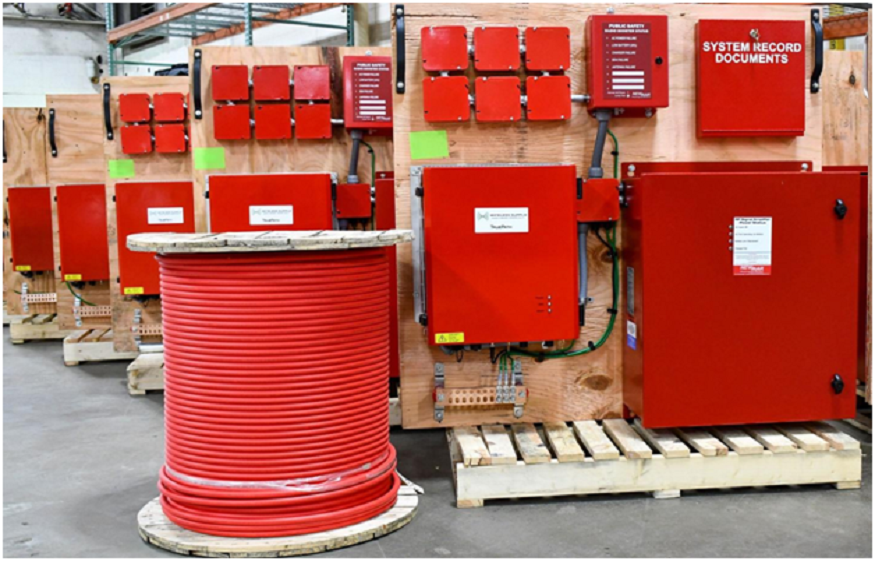
Grid testing is not a formality. It is the proof an AHJ uses to confirm the premises meets coverage targets in the areas they care about. A credible result does not just show “pass” on a single page. It documents the method, the test locations, the data, and the logic that ties measurements to the acceptance criteria. When the test package is organized, inspectors can review it faster and focus on final confirmation instead of prolonged debate.
When testing is treated as a deliverable from day one, inspections become less stressful. The project team can plan for access, coordinate areas that may be locked or tenant-controlled, and capture results in a format the AHJ can review efficiently. This is also where disciplined execution matters, because a clean DAS system install approach supports repeatable results, quicker troubleshooting, and fewer retest cycles when schedules are already tight.
Where projects commonly fail and why it matters
One frequent issue is confusing tenant connectivity with responder reliability. A building can have strong cellular service and still fail responder radio requirements in critical interior areas. That mismatch is common in large properties where signal feels “good enough” day to day, but emergency radio performance has not been measured. Owners often discover the gap only when permitting or final acceptance forces formal testing.
Another issue is coordination drift. If electrical, low-voltage, fire alarm, and construction teams are not aligned, installations can end up with compromises in pathways, grounding, labeling, or monitoring. Those problems may not be obvious until the AHJ inspects the system as a whole. By then, rework costs more because walls are closed, tenants are moving in, and timelines are compressed. A structured DAS system install process reduces this risk by keeping design intent, documentation, and field execution tied together.
What a compliant installation typically demonstrates in the field
During field inspection, fire marshals often look for clarity and control. They want equipment locations that match approved plans, labeling that supports maintenance, and an installation that feels deliberate rather than improvised. They may also review how alarms or fault conditions are communicated, because supervision is part of reliability. If an inspector can trace what is installed, how it is powered, and how it is monitored, approval conversations usually move faster.
In many cases, the inspection process improves when the project includes clean, AHJ-ready documentation. When a contractor can quickly present drawings, equipment details, and test results that match the jurisdiction’s checklist, the discussion stays focused and efficient. That is also why a well-planned public safety DAS installation is often less about “more hardware” and more about disciplined execution, with proof built into the workflow so the building can move toward occupancy without last-minute surprises.
Conclusion
Texas public safety compliance comes down to predictable radio performance in the spaces that matter most during emergencies. Fire marshals typically evaluate whether coverage thresholds are met, whether the system is supervised and resilient, and whether documentation proves performance using a method they trust. If your property is approaching plan review, renovation, or final acceptance, the strongest outcomes usually come from early alignment with the local AHJ and a verification plan treated as part of the build.
CMC Communications supports Texas commercial properties with engineering, integration, and validation services designed to reduce rework and inspection stress. Their team helps owners and contractors move from assessment to approval with organized documentation, code-aware planning, and practical execution that fits real construction timelines, especially when occupancy and safety milestones are approaching.
FAQs
Q 1. What does a fire marshal typically require before approving radio compliance?
Ans 1. Most AHJs want a complete submittal package. This usually includes the testing method, a map of all required test areas, and test results that prove coverage in those locations. They also check backup power and system supervision so any failures or alarms can be detected. Since requirements vary by city and code edition, it’s best to confirm the exact checklist with the local reviewer early.
Q 2. What happens if a building fails the final radio coverage test?
Ans 2. If the building fails, the team usually has to fix weak areas. That may mean moving antennas, adding antennas or amplifiers, improving cable routing, or correcting grounding and power issues. After the fixes, the building must be tested again using the same approved testing method. Good documentation of the changes and results helps speed up approval, even if the timeline is tight.
Q 3. How early should I test radio coverage in a new or renovated building?
Ans 3. Testing is most useful once the building shell and core areas are in place. At that point, stairwells, elevator cores, and underground levels are formed, so you can spot likely dead zones early. If problems show up, you can plan corrections before walls close and tenants move in. Early testing reduces last-minute delays during final inspections.
Q 4. Can building changes after installation affect radio performance?
Ans 4. Yes. New walls, tenant build-outs, added equipment, and layout changes can weaken signals or create new dead zones. Even small changes in dense areas can affect coverage. That’s why keeping records and doing periodic checks matters. If the building changes a lot, retesting is the safest way to confirm compliance.
Q 5. What should owners ask contractors or integrators before starting the project?
Ans 5. Owners should ask how the team will meet local AHJ requirements and what testing method will be used. They should also ask what documents will be provided for plan review and final inspection. It’s also important to confirm coordination plans for power, grounding, monitoring, and backup power, because these items often cause delays if they are not planned early.